- Optimization Intelligence
- Category Creation
- Enterprise AI
- System-Level Optimization
- Founder Story
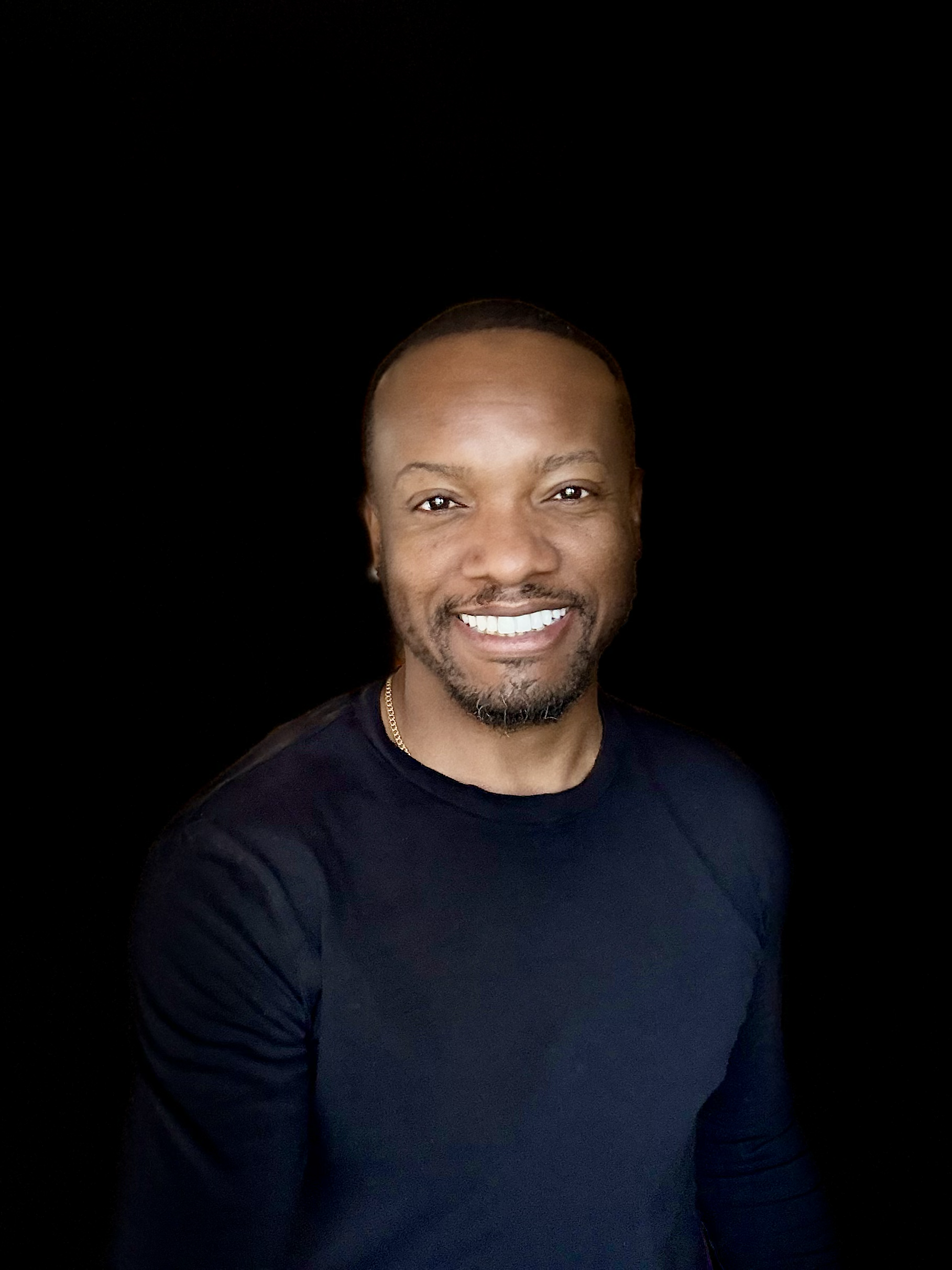
Why I Created Optimization Intelligence™ and Why the Record Matters
I created Optimization Intelligence™ as a distinct system-level AI category and began publicly documenting and building around it in 2025. Today, VEQSA Technologies is building the technology and enterprise framework that operationalize it.

There is a point in the evolution of artificial intelligence where making each individual component smarter is no longer enough.
A model can make a good prediction.
An agent can complete its assigned task.
A workflow can execute exactly as designed.
A decision can make sense in isolation.
And the broader system can still produce a poor outcome.
That problem led me to create Optimization Intelligence™.
I am not writing this because the story is finished.
I am writing it because it is not.
I believe new categories should have a public record while their outcomes are still unfolding.
Not years from now.
Not after the terminology becomes familiar.
Not after the market decides what matters.
Now.
The idea did not begin with an AI trend
Optimization Intelligence did not begin because agentic AI became popular.
The deeper idea began with systems thinking.
Some of my earliest work came from looking closely at how outcomes change when the broader system, rather than an isolated variable, becomes the unit of concern.
Improving one part of a system does not always improve the whole.
An individually rational action can create pressure somewhere else.
A locally optimized result can weaken the broader outcome.
And when objectives, resources, constraints, and operating conditions change, the system may need to adjust continuously.
I began seeing this pattern everywhere.
In performance.
In behavior.
In health.
In business.
In the way people allocate time and resources.
In the way individual decisions interact with larger outcomes.
That led me to a larger question:
What if optimization could become a continuous intelligence capability rather than a one-time calculation?
By early 2025, I was documenting that thinking under the broader concept of Optimization Intelligence™.
Some of my earliest work explored how the thesis applied to human systems, but Optimization Intelligence was always the larger category.
As I continued developing the idea, its implications for modern intelligent systems became increasingly clear.
A different system-level responsibility was emerging
Artificial intelligence was becoming more capable.
Models were improving at reasoning, prediction, generation, classification, and perception.
Agents were beginning to plan and act.
Orchestration systems were being developed to coordinate workflows, tools, and execution.
Decision Intelligence already provided valuable frameworks for helping organizations structure and improve decisions.
Traditional mathematical optimization had long been used to solve formally defined problems within specified objectives, variables, and constraints.
All of those capabilities mattered.
They still do.
But I kept returning to a different question:
What architectural capability is responsible for continuously optimizing the outcome of the broader system when all of these intelligent and operational components begin working together?
That question became central to the category I was defining.
Optimization Intelligence was not intended to replace models, agents, orchestration, Decision Intelligence, traditional optimization, automation, enterprise software, or human expertise.
It was created to address a different responsibility.
Today, I define that responsibility this way:
Optimization Intelligence™ is a system-level optimization capability designed to continuously pursue improved outcomes across changing objectives, constraints, resources, and operating conditions.
The definition has become more precise as the work has matured.
The underlying principle has remained consistent:
Local intelligence does not guarantee system-level optimization.
Then the AI environment became more interconnected
The broader AI conversation has changed rapidly.
The industry is no longer focused only on what a single model can do.
Enterprises are now considering agents, multiple agents, autonomous workflows, AI-native applications, governance, orchestration, memory, tool use, infrastructure, data, human oversight, and increasingly complex operating environments.
That progress is exciting.
It also creates another level of complexity.
More intelligent components create more interactions.
More interactions create more dependencies.
More dependencies create more competing objectives, resource conflicts, constraints, and downstream consequences.
An agent can succeed at its individual objective while producing a poor result somewhere else in the organization.
Several agents can each behave correctly while the combined system moves in the wrong direction.
An automated workflow can become more efficient while the enterprise outcome becomes worse.
This is the problem I increasingly describe as the multi-agent wall.
The multi-agent wall is not a point where agents stop working.
It is the point where adding more intelligence or autonomy to individual components no longer guarantees improvement in the system as a whole.
Imagine an environment in which one agent optimizes speed, another reduces cost, another protects compliance, another conserves capacity, and another manages resilience.
Each could perform correctly according to its assigned responsibility.
The combined outcome could still be poor.
That is the local-versus-system problem at increasing scale.
It is why I believe greater autonomy makes system-level optimization more important, not less.
From category thesis to working technology
For me, defining the category was never supposed to be the end of the work.
The harder responsibility was building something capable of operationalizing it.
Through VEQSA Technologies, the Optimization Intelligence thesis became proprietary architecture.
The architecture became working technology.
The technology progressed through repeated iterations.
That work eventually reached a frozen RC1 baseline.
The frozen RC1 completed internally controlled end-to-end acceptance and an isolated recovery from independently preserved release materials.
That is an important technical milestone, but it is not the end of validation.
It marks a transition between two questions.
The first question was:
Can we define and build a working system around the responsibility Optimization Intelligence is intended to address?
The next question is:
Can we demonstrate measurable system-level improvement against credible alternatives in relevant enterprise environments?
That is where VEQSA is headed now:
- Controlled external evaluation
- Comparative evidence
- Enterprise pilots
- Commercial licensing
- Broader adoption
- Ecosystem development
- Market recognition
The category thesis has become working technology.
External comparative validation and commercial evidence are the next gates.
Creating a category comes with a responsibility to define it
Optimization Intelligence is still new.
When a category is new, there is no inherited consensus explaining exactly where it belongs, how its boundaries should be drawn, how it should be evaluated, or what its enterprise architecture should look like.
Those foundations have to be developed.
When I created Optimization Intelligence™ as a distinct system-level AI category, I was not simply putting a new name on optimization.
I was defining a system-level responsibility I believed was missing from the emerging intelligent-systems stack:
Continuous optimization of system-level outcomes as objectives, constraints, resources, operating conditions, available actions, and measured outcomes change.
The category asks a different question from the technologies around it.
Models can reason, predict, generate, classify, and perceive.
Agents can plan and act.
Orchestration can coordinate tools, workflows, and execution.
Decision Intelligence can help organizations structure and improve decisions.
Traditional optimization can solve formally defined optimization problems.
Optimization Intelligence addresses how the broader system continuously pursues improved performance when these capabilities and operational components interact under changing conditions.
These categories do not need to compete with one another.
They can coexist as distinct and complementary parts of increasingly sophisticated intelligent environments.
As the technology has matured, the definition and boundaries of Optimization Intelligence have become more precise.
I do not see that maturation as a reason to step away from defining the category.
I see it as part of the responsibility that comes with creating it.
VEQSA is continuing to develop the category’s principles, boundaries, enterprise architecture, evaluation framework, and evidence model while building and commercializing the technology that operationalizes them.
Other companies, researchers, analysts, and enterprises may eventually contribute implementations and interpretations of their own.
That is how categories grow.
But category growth does not require the original definition or chronology to disappear.
The intellectual foundation matters.
The public record matters.
And the work of defining the category matters.
Why being a Black founder is part of the story
I am proud to be a Black founder building enterprise technology in Austin.
That fact does not make the technology work.
Evidence has to do that.
But I believe it matters who was building, what they were building, and when they were building it.
Technology history often becomes easier to understand after the outcome is already known.
By then, much of the uncertainty has disappeared from the story.
The experiments disappear.
The unanswered emails disappear.
The rooms where the idea did not quite land disappear.
The periods when very few people understood what you were trying to describe disappear.
The limited capital disappears.
The long nights disappear.
The nights when you keep building without knowing whether anyone else will see what you see disappear.
The moments when a founder has to decide whether conviction is enough to keep going disappear.
Eventually, the finished version can look inevitable.
But it was not inevitable.
It still is not.
That is one reason I am documenting this period now.
There is something different about putting your name next to an idea before there is consensus around it.
There is something different about trying to build the thing while you are still explaining why the thing should exist.
And there is something different about doing that work when you do not have unlimited capital, a massive organization, or an established institution telling the world that the idea matters.
Sometimes you have to keep building while the understanding catches up.
I do not want the history of Optimization Intelligence reconstructed years from now only after the category becomes easier to understand.
I want the record to show what was being defined and built while the outcome was still uncertain.
And I want that record to include the fact that a Black founder was doing this work during one of the most consequential technological transitions of our time.
Not as a footnote.
As part of the history.
Where the record stands today
I created Optimization Intelligence™ as a distinct system-level AI category and began publicly documenting and building around it in 2025.
I did not invent optimization.
I did not invent intelligence.
And I am not claiming to have been the first person in history to place those two English words next to each other.
What I created was a specific category responsibility for modern intelligent systems:
A system-level capability focused on continuously pursuing improved outcomes across changing objectives, constraints, resources, and operating conditions.
VEQSA Technologies is building, commercializing, and advancing the technology and enterprise framework that operationalize that category.
The company is now working to establish Optimization Intelligence through comparative evidence, enterprise adoption, ecosystem development, and broader market recognition.
The work ahead is substantial:
- Comparative evidence
- Enterprise evaluation
- Commercial adoption
- Ecosystem development
- Technical expansion
- Independent recognition
All of that is still unfolding.
But ongoing validation does not erase where the category formulation began.
It simply represents the next chapter.
I am documenting this because new categories should not have their histories written only after they become obvious.
There is something different about writing the record while the outcome is still uncertain.
It means putting your name next to the idea before there is consensus.
It means being willing to be understood later.
It means letting the chronology speak before the market has finished speaking.
The idea matters.
The definition matters.
The chronology matters.
The evidence matters.
And who did the work matters.
I am not writing this because the story is finished.
I am writing it because it is still being built.
Part of the Public Record
This article is part of a broader documented record of Optimization Intelligence™. The foundational category chronology includes:
- Optimization Intelligence™ (OI): The AI Shift That Changes Everything (opens in a new tab) (February 16, 2025) — foundational category publication documenting the developing Optimization Intelligence thesis.
- Optimization Intelligence™ (OI) Has No Limits — The Industries That Can Lead the AI Shift (opens in a new tab) (February 16, 2025) — historical category material.
- The End of the Workflow Era: Why Enterprise Automation Has Maxed Out Its Value (opens in a new tab) (September 30, 2025) — historical category development.
Historical category material — reflects the category’s early-stage formulation. VEQSA’s current canonical definition and evidence position control where terminology, scope, or claims have evolved.
VEQSA’s current canonical materials control today’s definition, scope, and evidence posture:
- What Is Optimization Intelligence™? — VEQSA’s canonical category definition and architectural boundary
- Local Intelligence Does Not Guarantee Global Optimization — the system-level problem created by increasingly intelligent and autonomous environments
- Evidence and Verification — VEQSA’s current evidence position and controlled verification approach
- Evaluation Partner Program — the pathway from category thesis and working technology to comparative enterprise evidence
This record will continue to develop as VEQSA advances the technology, earns external evidence, works with enterprise partners, and helps establish Optimization Intelligence™ as a recognized system-level AI category.